Common Text

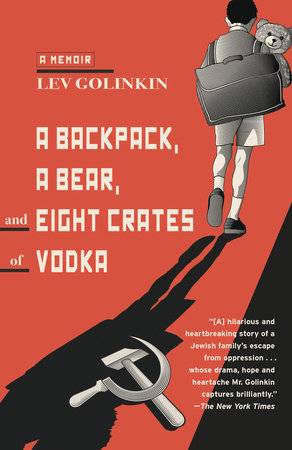
The Class of 2030 will spend their time on campus thinking deeply about universal human experiences like family and community, hope and despair, prejudice and assumptions. To support the Class of 2030 as the students embark on their time at Loyola, and to give each student a shared first experience, we have selected A Backpack, a Bear, and Eight Crates of Vodka, by Lev Golinkin, as the 2026-27 Loyola University Common Text.
Loyola faculty members, administrators, and students chose A Backpack, a Bear, and Eight Crates of Vodka after reading almost three dozen books. The Common Text Committee members decided on A Backpack, a Bear, and Eight Crates of Vodka for its vibrant memoir and humor in the face of adversity, and complex and nuanced exploration of the experiences of antisemitism, the refugee experience, immigration, family dynamics, and more.
A Backpack, a Bear, and Eight Crates of Vodka offers the opportunity to consider links between the past and present, how authoritarianism and prejudice are intertwined, and how brave human beings can be at any age. The book and the Common Text Discussion are an introduction to the depth of thought, imagination, and challenge you can expect from your time at Loyola. We look forward to reading along with you and entering a conversation that enlightens and enriches your college experience.
Members of the Class of 2030 will receive a copy of A Backpack, a Bear, and Eight Crates of Vodka at summer orientation. Those not attending an in-person orientation session will receive their copy in the mail or as an e-book code. The text will be integrated into class discussions and programming throughout your first-year experience.
In the twilight of the Cold War (the late 1980s), nine-year old Lev Golinkin and his family cross the Soviet border, leaving Ukraine with only ten suitcases, $600, and the vague promise of help awaiting in Vienna. Years later, Lev, now an American adult, sets out to retrace his family’s long trek, locate the strangers who fought for his freedom, and in the process, gain a future by understanding his past.