Sellinger’s industry partnerships drive new real estate major
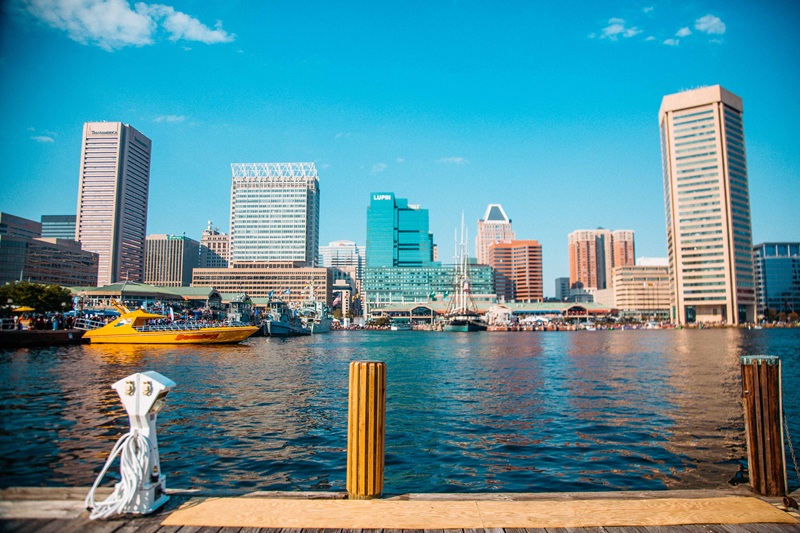
Loyola’s Sellinger School of Business and Management is launching the Bachelor of Science in Real Estate this year. The program will equip students with the knowledge and skills to analyze real estate markets, navigate investments and finance, and evaluate real estate opportunities. As part of the program, students will work with real-world development projects made possible through the Sellinger School’s strong ties to industry.
The Loyola Real Estate Advisory Board, consisting of leaders in Baltimore’s real estate industry, guides and supports the new program. Owen Rouse, MBA ’92, chair of the board and senior vice president at MacKenzie Commercial Real Estate Services, and Karyl Leggio, Ph.D., professor of finance, discuss the new program and role of real estate in Baltimore.
Why did Loyola introduce the Bachelor of Science in Real Estate?
Leggio: Loyola launched the real estate program to meet a clear and growing demand from students, industry partners, and regional employers for graduates who understand the complexities of today’s property, development, and capital markets. As Baltimore and the broader Mid-Atlantic region experience significant redevelopment, infrastructure investment, and shifts in commercial real estate, the University recognized the need for a program grounded equally in technical skills, ethical leadership, and community impact. The major aligns with Loyola’s Jesuit mission of preparing students to become leaders who use real estate as a tool for economic vitality, urban regeneration, and social good.
How did Loyola develop the real estate curriculum?
Leggio: The curriculum was designed through an iterative process that combined industry input from developers, lenders, investment managers, community development leaders, and construction professionals. We tailored content to Baltimore’s unique economic, demographic, and community landscape and leveraged our faculty’s expertise in finance, economics, ethics, sustainability, and urban studies. The program emphasizes experiential learning priorities consistent with Sellinger’s strategic plan and Loyola’s mission. The result is a curriculum that blends financial modeling and investment analysis with location analytics, development feasibility, regulatory frameworks, sustainability, and community-impact evaluation.
Who will benefit from the new area of study?
Leggio: The program serves multiple audiences. It supports undergraduates seeking careers in commercial real estate, development, finance, investment, community development, and brokerage or asset management. It also serves employers and industry partners who gain access to a pipeline of graduates with strong analytical foundations, ethics-driven decision-making and real-world training. The Baltimore region benefits as well, because students and graduates are prepared to contribute to economic development, housing innovation, and revitalization efforts.
Rouse: Among the beneficiaries, there is a generation of commercial real estate practitioners with college-bound children who are conversant in the industry that employs their parents. Now there is a way for them to obtain formal training and become well equipped to enter the job market. There are also companies that can advantage themselves by hiring a well-groomed real estate practitioner with practical skills under their belt.
What do the Sellinger School’s industry partnerships mean for students?
Leggio: Sellinger has built a strong network of partnerships with developers, real estate private-equity firms, lenders, construction managers, architecture and engineering firms, community development corporations and public-sector agencies. These partnerships support internship and externship pipelines, site visits and urban-lab projects, guest lectures and industry-led workshops, advisory board collaboration, student research projects tied to real deals and community challenges, and networking events and professional-development programming. These industry relationships form the backbone of the program.
Rouse: The imprimatur of Loyola University Maryland and the Sellinger School of Business cannot be understated. An example of this can be seen in the success of the accounting majors minted over the years at the University. By graduating from a real estate program that extends from book learning to practical, durable skills, students will wear the badge of the Sellinger School as they enter a competitive workforce. Their training will be deep, current, and delivered by local professionals from which they can begin the relationship-building that will serve their careers.
How can real estate transform a city?
Leggio: Real estate is one of the most powerful levers for shaping a city’s future. Thoughtful development can revitalize neighborhoods, attract employers, generate tax revenue, improve housing options, and catalyze community well-being. When done responsibly, real estate can activate underused land, improve transportation linkages, support small businesses, and create inclusive growth. For Baltimore and many American cities, the next decade offers a chance to reimagine legacy infrastructure, convert obsolete buildings, and build more resilient, equitable, and sustainable urban environments.
Rouse: Thriving cities have the ability to transform themselves as markets, demographics, public policy, and infrastructure shift. Baltimore is just such a city with some irreplaceable capital: central location, stout infrastructure (port, BWI, Amtrak), world-class medicine, and the largest estuary in the U.S. Transformation needs “boots on the ground” execution and idea factories to challenge future growth.