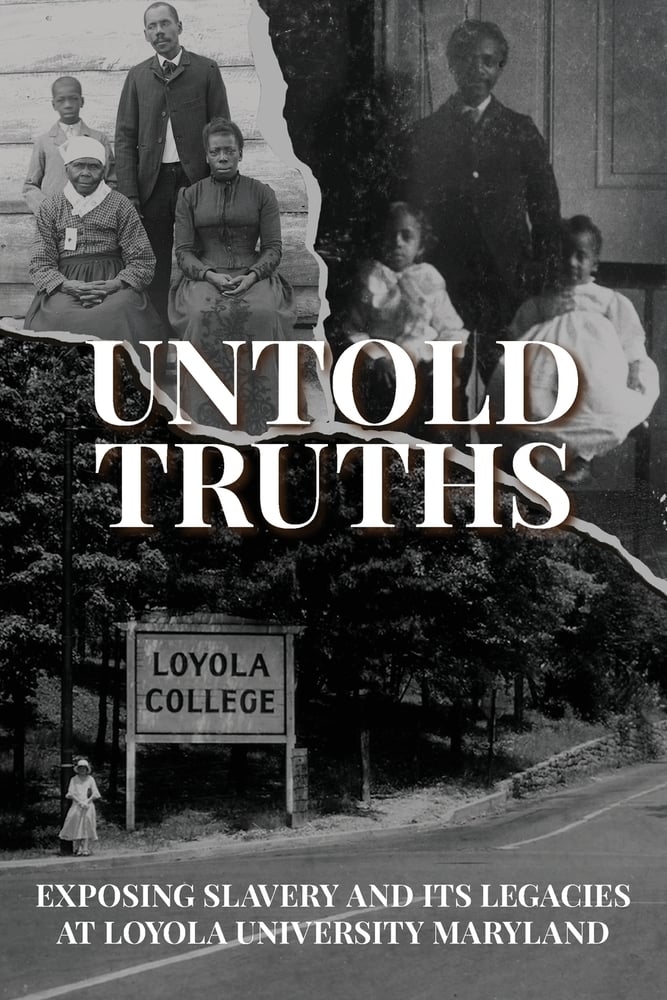
 Untold Truths brings together scholars, students, staff, and descendants to explore Loyola University
Maryland’s historical connections to slavery, Jim Crow, and racial injustice. They
do so through a variety of forms, including historical narratives, analysis of newly
uncovered primary documents, and creative works inspired by this history. Privileging
the voices, perspectives, and research of descendants of the men, women, and children
Jesuits had enslaved, sold, and trafficked in 1838, this collection of essays explores
Loyola’s connections to that sale and its ongoing reverberations for the institution
and all those connected to it. This diverse and rich volume contributes to ongoing
efforts to gain a fuller understanding of Loyola’s past in hopes of finding pathways
towards racial justice and inclusion on its campus—and on all campuses that seek to
address historical injustices.
Untold Truths brings together scholars, students, staff, and descendants to explore Loyola University
Maryland’s historical connections to slavery, Jim Crow, and racial injustice. They
do so through a variety of forms, including historical narratives, analysis of newly
uncovered primary documents, and creative works inspired by this history. Privileging
the voices, perspectives, and research of descendants of the men, women, and children
Jesuits had enslaved, sold, and trafficked in 1838, this collection of essays explores
Loyola’s connections to that sale and its ongoing reverberations for the institution
and all those connected to it. This diverse and rich volume contributes to ongoing
efforts to gain a fuller understanding of Loyola’s past in hopes of finding pathways
towards racial justice and inclusion on its campus—and on all campuses that seek to
address historical injustices.Loyola’s next steps of reconciliation with the student body and GU272 descendant community
The Greyhound
This article is the fourth of a four-part series investigating Loyola’s connections to slavery. Over the course of two years, publishers, authors, and editors have been cultivating “Untold Truths: Exposing Slavery and Its Legacies at Loyola...