Our Common Home, A Hub for Community
Loyola's new space, the Loyola Community Center, helps Loyola deepen its commitment to Baltimore
Dan Pontious has lived in the Radnor-Winston neighborhood adjacent to Loyola’s Evergreen campus for nearly 30 years with his wife, Karen. During that time, he has seen a great deal of change. Pontious says that one thing that has made an impact over the years is Loyola and its investment in local neighborhoods.
“Loyola has been critical over the decades in helping communities come together to advocate for a more vibrant and just corridor,” said Pontious, who is the president of the York Road Partnership.
Now, Loyola is marking a new chapter in its story as an anchor institution that is invested in Baltimore and in the York Road corridor. Thanks to the recent addition of significant grant funding, the University is enhancing a space that will serve as a community hub for members of the University and its neighbors who are partners in the initiative to strengthen the community.
“We often convene groups of our partners together and ask: how do we work together, coalition-style, to tackle a neighborhood issue?” said Gia Grier McGinnis, Dr.PH., executive director of neighborhood resilience and community engagement. “Everyone contributes from their angle, and we serve as the glue that connects everyone.”
Through a combination of private philanthropy and federal and state funding, the University is transforming its property at 5104 York Road into a dedicated community hub, the Loyola Community Center, to serve as the heart of Loyola’s food access work, environmental and integral ecology programming, and neighborhood partnership.
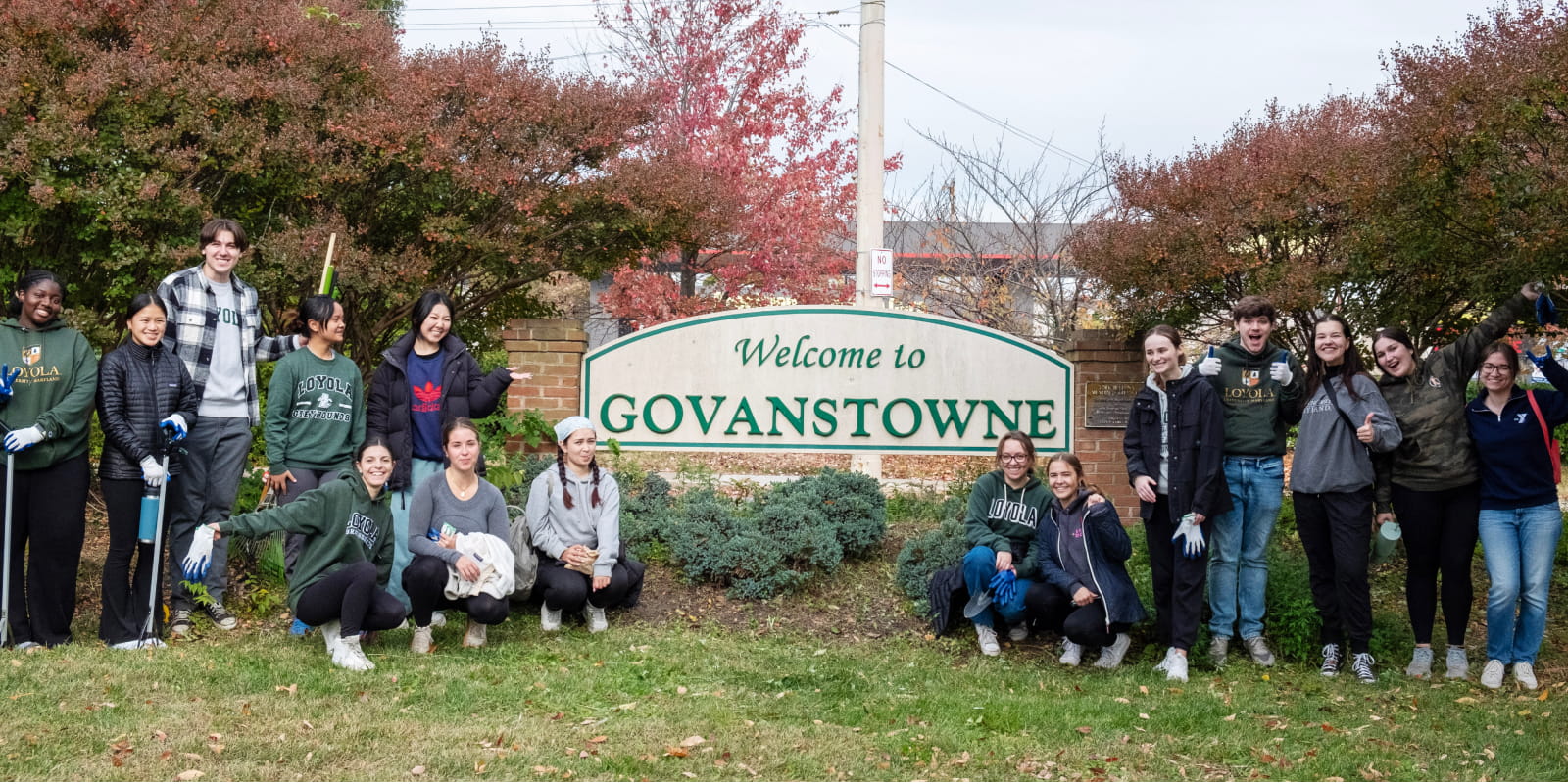 Loyola has had a longstanding presence and involvement on York Road. The addition of the community hub creates a stronger visible presence for the work that happens through Loyola’s collaborative work with its neighbors and community partners.
Enhanced Space, Expanded Opportunities
The addition of the community hub creates a stronger visible presence for the invaluable, unseen work that happens through Loyola’s collaboration with its neighbors and community partners. It also brings new life to a utilitarian space that can be easy to overlook. For more than a decade, this understated building has served as the heart of Loyola’s commitment to place-based community engagement in Greater Govans and to expanding food access along the York Road corridor.
Located at 5104 York Road not far from the Evergreen campus, the one-story concrete building served as a Ford dealership before it was purchased by Loyola in 1998. Over the years, the Loyola Community Center has become a shared gathering place for neighbors and the University alike, hosting programs such as the Govans Farmers Market, York Road Community Days, and the Govans Community Fridge.

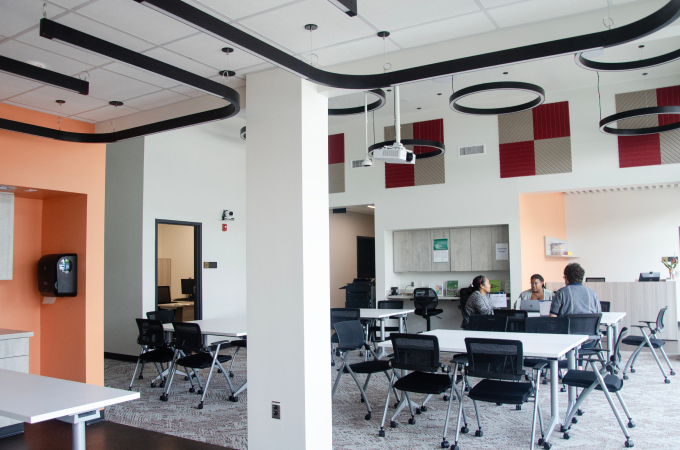
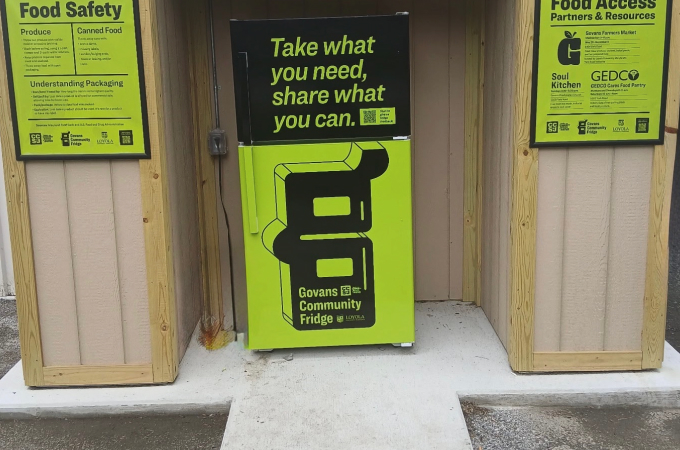 Over the years, the Loyola Community Center has become a shared gathering place for neighbors and the University alike, hosting programs including the Govans Community Fridge. - Photos by Malia Leary, Courtesy of CCSJ
“In many ways, the property reflects Loyola’s broader role in Baltimore,” said Deb Cady Melzer, Ph.D., vice president for mission and student development. “Just as it has grown into an anchor for the surrounding community, Loyola has embraced its role as an anchor institution in the city: bringing people together, investing in local partnerships, and working alongside neighbors to build a stronger, more resilient common home.”
From Initiative to Infrastructure
Loyola’s longstanding presence and involvement on York Road has attracted attention not just locally, but also regionally and nationally—making it possible for the University to secure significant financial support.
In 2024, the University received over $1.2 million in federal and state funding to create a community hub on York Road. Earlier this year, Loyola received $267,000 in grants to support improvements at the location for the community hub. These grants—a $167,000 grant from the France-Merrick Foundation and a $100,000 grant from the Middendorf Foundation—will support new storefront windows and doors, exterior cladding, and improved lighting at 5104 York Road. They will also support the installation of a water bottle filling station and outlets and USB ports on the building’s exterior, both of which will be available to the community.
The improvements are part of a larger effort to enhance Loyola’s new Center for Neighborhood Resilience.
“The difference now is we have infrastructure, so we have a community center where people can gather, and we can do programs year-round,” said Grier McGinnis.
A Foundation Built on Trust
Loyola also received a $500,000 Trust in Practice Award to support its new Rooted in Trust program, one of 11 national projects selected for the award, which is co-sponsored by Aspen Institute’s Alliance for Social Trust and Allstate. The program, to be launched with three Greater Govans nonprofit partners, aims to train, support, and connect an intergenerational network of neighborhood leaders who revitalize and activate public spaces as a pathway to building trust.
“I think the fact that we were awarded that grant acknowledges the work that our partners have been doing for years,” said Grier McGinnis. “You typically award these grants to known trust-building entities.”
Grier McGinnis points out that, while the grant provides new opportunities to grow Loyola’s community engagement efforts along York Road, it is more of a continuation than a starting point.
The trust-building element is also particularly important in the context of York Road’s history, which reflects broader divisions within Baltimore.
“This is one of the starkest racial dividing lines in the region, and a big part of our work is building trust across that divide,” said Pontious.
That reality creates both friction and opportunity.
“We bring people together around shared goals—finding common ground and turning that into action,” said Allison Duggan, community organizing manager with the York Road Partnership.

Anchored in Baltimore
Loyola serves as a facilitator and a coalition-builder, a partner and a resource. Its work is grounded in solidarity and committed to the common good with the University’s Center for Neighborhood Resilience at the helm.
The mission of the Center, which was renamed in 2025, builds on the long-standing work and coalition-style approach of Loyola’s former York Road Initiative (YRI). Born out of Loyola’s Year of the City, YRI established the University’s institutional commitment to place-based justice through the call of the 2008-2013 strategic plan to “take a leadership role in the development of a multi-dimensional plan to improve the quality of life for all persons living, working, and learning in the York Road corridor.”
YRI was instrumental in shaping the 2015 York Road Commercial Corridor Vision and Action Plan, which recommended the creation of the York Corridor Business Improvement District to provide services that ensure a clean, green, and vibrant corridor.
The Center now focuses on youth development and student leadership; community life and connection; food access and environmental stewardship; and community health and wellness. Recent efforts include a homeless outreach initiative in partnership with the Baltimore City Mayor’s Office and faith-based organizations along the corridor.
“It’s making sure communities have the tools and the skills they need to withstand hardships or crisis,” Grier McGinnis said.
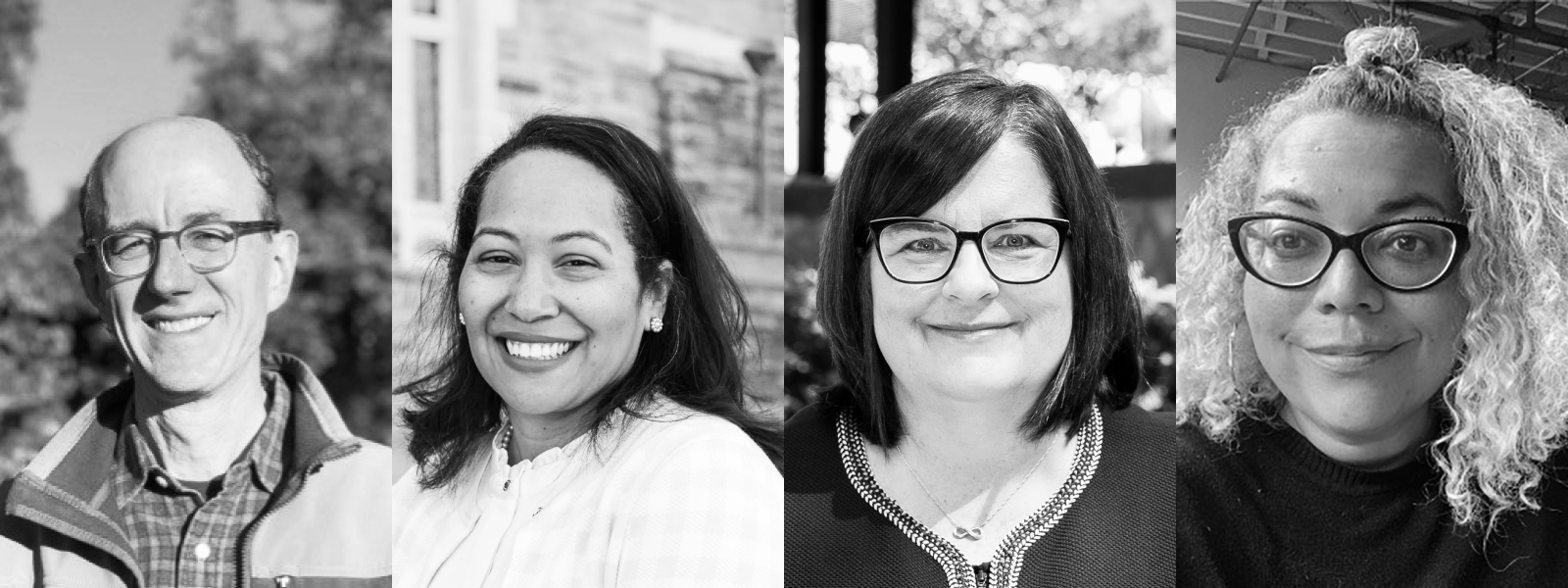 Dan Pontious, Gia Grier McGinnis, Dr.PH., Deb Cady Melzer, Ph.D., and Allison Duggan
Classroom to Community
While Loyola helps shape the city, the city also shapes Loyola. Across disciplines, students engage with Baltimore in ways that connect their academic work and co-curricular involvement to real-world challenges and opportunities while living out Jesuit values like service, justice, and cura personalis (care for the whole person), as well as the University’s Laudato Si’ commitment to care for our planet and our people.
“For all of us, and particularly students, we are invited and challenged to listen, to act locally, and to align interests and identity with those who historically have been left out—this experience opens a world which flows out into greater Baltimore as well as into their choice of coursework and internships,” said Mary Sue Callan-Farley, director of the Center for Community, Service, and Justice (CCSJ).
For Jeeda Hennawi, ’27, a biology and Spanish double major, who aspires to go into the medical field and has a strong passion for service, she’s found opportunity at CCSJ. Hennawi serves as the CCSJ program coordinator, supporting much of the service work along the York Road corridor.
“I really like how CCSJ takes a very holistic approach to service, as well as the environmental approach because environmental health makes a huge difference in someone’s day-to-day life,” Hennawi said.
Connecting interests to the city can also take many other forms. Through CCSJ, nearly 800 students participate in service, leadership, and outreach annually with community partners across Baltimore through their coursework, while the Loyola Clinical Centers (LCC) expands access to inclusive health care, serving more than 40,000 people in the community.
“Through providing services to individuals and families across Baltimore and outside the walls of the LCC, Baltimore becomes an essential part and extension of our graduate students’ clinical education, just as our students and programs contribute to the well-being of the city,” said Kara Vincent, ’91, M.S. ’93, LCC executive director.
Other academic and co-curricular programs extend that impact. For example, the Center for Research and Evaluation advances leadership and equity in education, and the Karson Institute for Race, Peace, and Social Justice fosters research and dialogue on critical social issues. The Nick and Susie Simon Center for Innovation and Entrepreneurship supports aspiring entrepreneurs as they develop ventures and ideas with real-world impact.
“Within the past five years, a lot of new opportunities have opened up in community engagement, including in our academic units,” said Grier McGinnis. “We have deans who are incredibly engaged and always looking for new opportunities.”
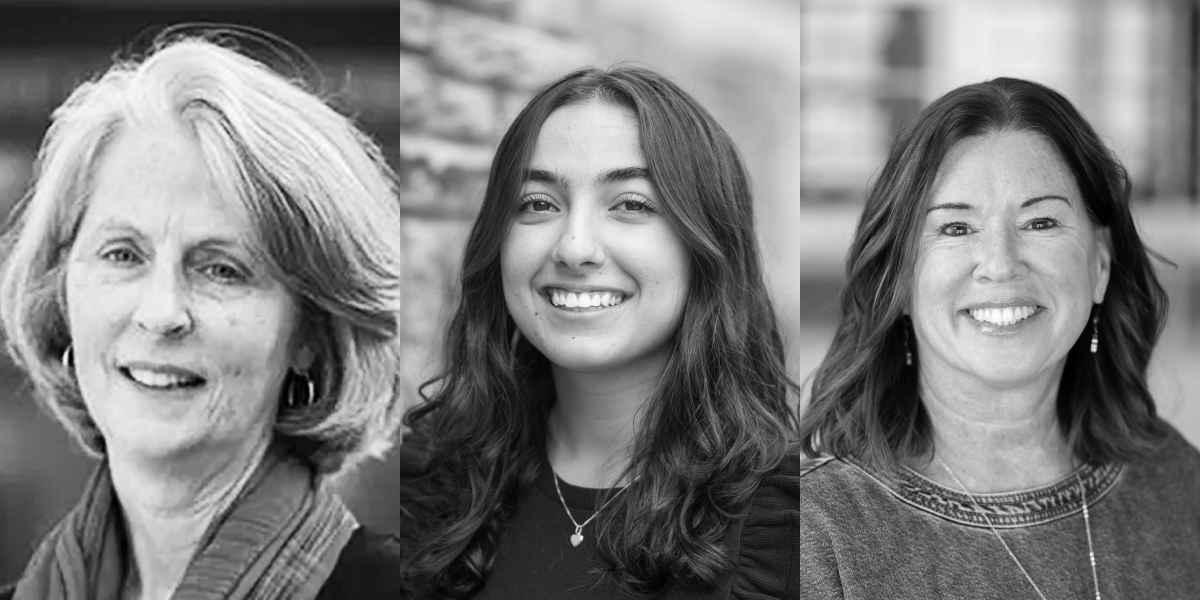 Mary Sue Callan-Farley, Jeeda Hennawi, and Kara Vincent
A City Worth Rooting For
As Loyola continues to implement its strategic plan, Together We Rise, initiatives like the Center for Neighborhood Resilience are becoming even more central to the University’s identity.
“Loyola is deeply committed to being a good neighbor,” said Cady Melzer. “Our Jesuit values of forming people for and with others require that we educate not only for competence, but for compassion and conscience. That could not happen without thinking about our relationships with our neighbors, both on and off campus.”
What began with a small, unassuming building on York Road has grown into far more—a center dedicated to civic engagement and trust, a physical hub for community initiatives, and an institutional commitment to our common home. And as Loyola continues to invest in Baltimore, that building serves as a reminder of how meaningful change often starts small and grows over time, with local community members at the forefront. And its enhanced presence will help Loyola serve and partner with the community in even greater ways.
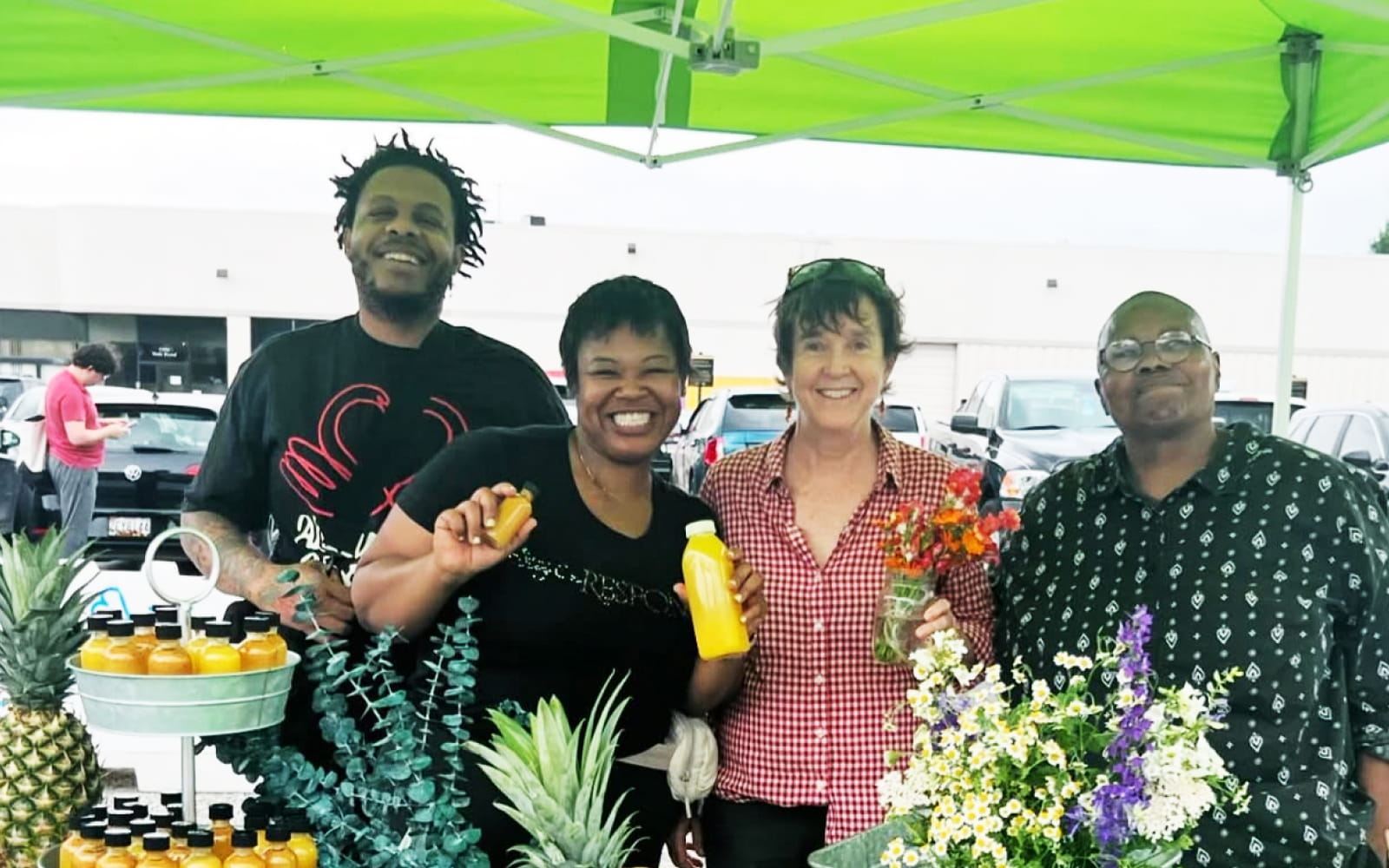 Local growers, makers, and creators from across the Baltimore region bring their goods to the Govans Farmers Market. - Photo courtesy of CCSJ
“Baltimore is a very entrepreneurial city. There are so many creative and talented organizations, individuals, artists, and community developers who want to make the city better,” said Grier McGinnis. “Baltimore is always the city that you want to root for.”
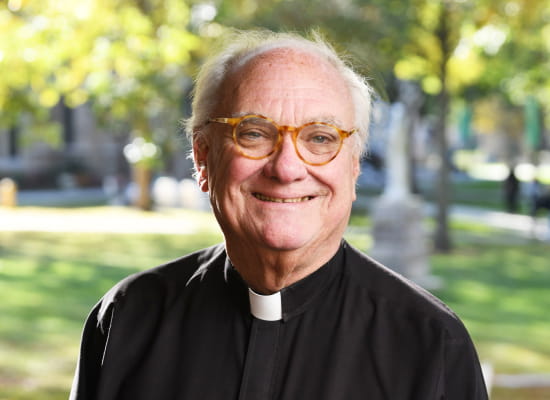
Choreography of Community
Read Rev. Timothy Brown's reflections on Loyola and Baltimore's shared commitments