Ask the Expert: Navigating the Age of AI
Gloria Phillips-Wren, Ph.D., discusses how to utilize AI as a co-pilot Madison Boris,’ 14, MBA ’26
Artificial intelligence is reshaping how we work, learn, create, and make decisions. From chatbots that draft emails to tools that analyze vast amounts of data in seconds, AI is becoming an everyday companion. But where should humans draw the line?
 Gloria Phillips-Wren, Ph.D.
, professor of information systems in the Sellinger School of Business and Management, has spent her career studying decision-making and how technology can support it. She shares why AI should enhance, not replace, human judgment, creativity, and ethical thinking.
Artificial intelligence is becoming part of our daily lives. How can AI help people make better decisions without becoming overly dependent on it?
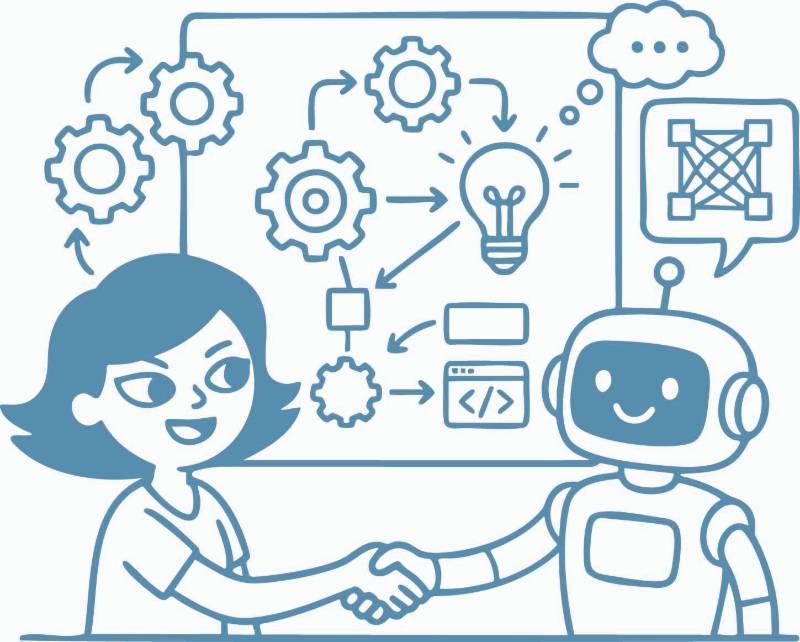
AI is already woven into our everyday lives. The arrival of generative AI has changed how we interact with technology because we can communicate with it using natural language. The key is to think of AI as a co-pilot, not the pilot. AI can help us organize information, identify patterns, and improve productivity, but discernment and reflection remain uniquely human abilities. Those are values Loyola has emphasized for nearly 200 years, and they're just as important in the age of AI.
What’s one misconception people have about tools like ChatGPT?
People often place too much trust in generative AI. At its core, it’s making predictions based on patterns found through enormous amounts of data. That means it can be wrong, biased, or misleading. While these systems are improving rapidly, they don't understand your personal experiences, emotions, or the full context behind a decision. Human judgment is still irreplaceable.
You’re researching how generative AI can enhance creativity. What have you discovered?
One of my team’s most exciting findings is that AI works best as a brainstorming partner rather than a replacement for original thinking. Our research focuses on helping people develop stronger data analytics skills, and we found that creativity plays a critical role, especially in the earliest stages of defining a problem and generating ideas. When people develop their own ideas first and then use AI to expand or refine them, creativity actually improves. If you begin with AI instead, you may unintentionally limit your own creative thinking.
What skills should today’s students develop as AI becomes more common in the workplace?
AI will undoubtedly become an increasingly valuable workplace tool because it can process massive amounts of information far faster than humans. Students should learn not only how to use these technologies effectively, but also when they’re appropriate and whether the benefits outweigh the costs. Understanding the technology is important, but so is knowing when a decision belongs in human hands.
What ethical issues concern you most as AI becomes more sophisticated?
We need to think beyond what AI can do and ask what it should do. AI systems require enormous amounts of electricity, water, and computing resources. We should consider who benefits from these technologies, who bears the costs, and whether certain applications truly justify the resources they consume. We also don’t yet know how widespread AI use may affect the way people think and learn over time. Finding the right balance between people, processes, and technology will be critical.
Looking ahead, what excites you most about AI’s future?
My greatest hope is that AI will enable breakthroughs in medicine that improve and save lives. In many cases, we may not even think of it as AI. Instead, it will quietly power discoveries by processing enormous amounts of data and uncovering patterns humans couldn’t find alone. Like any powerful technology, AI requires thoughtful safeguards and responsible use, but I believe it has tremendous potential to make the world better when guided by human wisdom.
What makes Loyola’s approach to preparing students for an AI-driven future unique?
Loyola’s emphasis on discernment, reflection, ethics, and care for others gives students an enduring foundation. Technology will continue to evolve, but our values remain constant. We want graduates who can think critically, evaluate complex situations, and make thoughtful decisions that consider both people and the broader impact of technology.

A 500-Year-Old Approach to Artificial Intelligence
Read about taking a Jesuit approach to new technologies