1952: ROTC Comes to Evergreen
The founding of the Greyhound Battalion
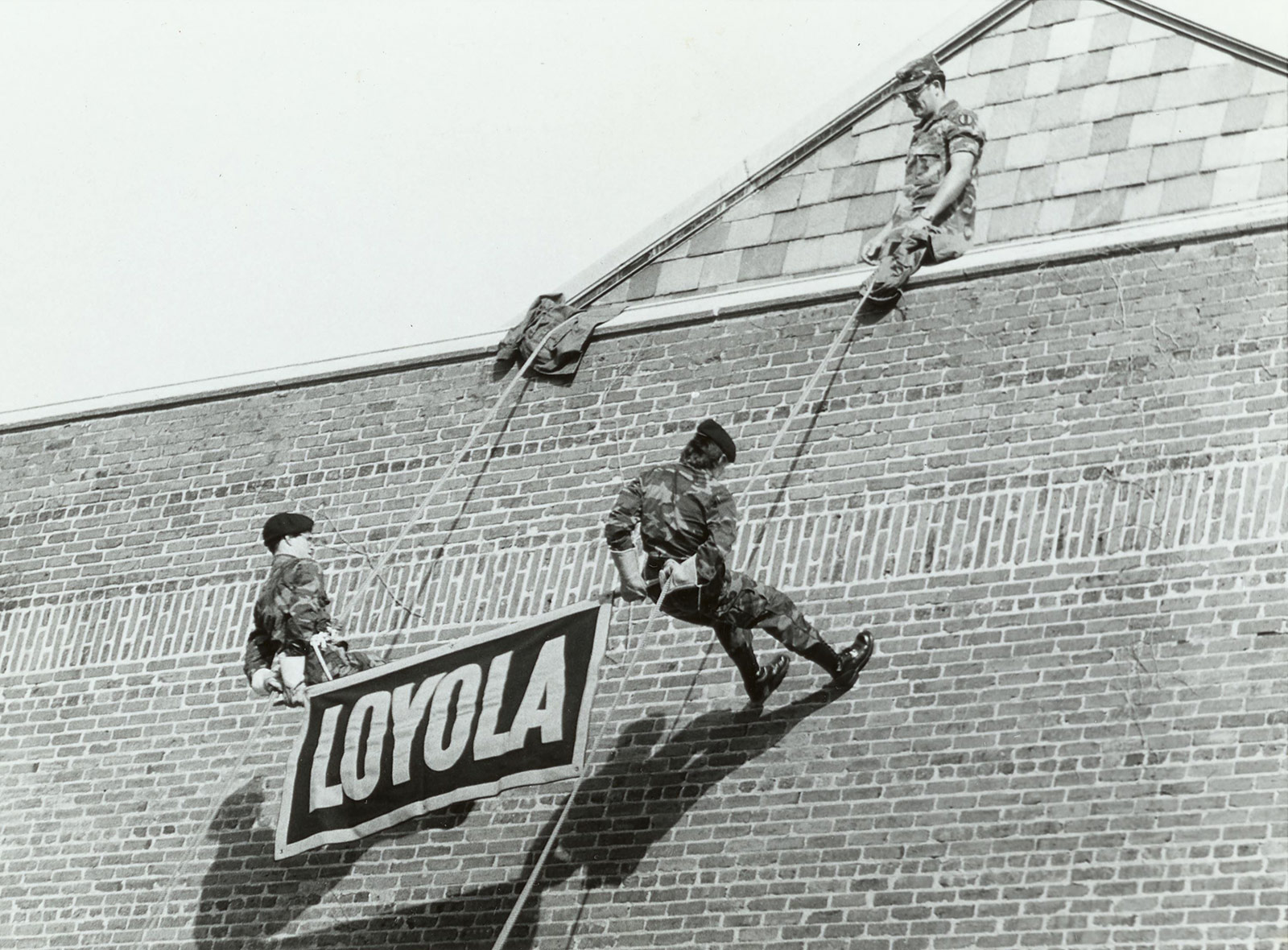 Courtesy Loyola/Notre Dame Library
The day after Loyola opened Alumni Memorial Chapel as a tribute to alumni who lost their lives in World War II, the University welcomed the Reserve Officers’ Training Corps (ROTC) to campus. The Greyhound Battalion was born.
“The 1952 Fall term brought a new invasion of Evergreen. The campus lawns and athletic field took on the appearance of a military encampment as Loyola’s new ROTC unit was established,” recalls the 1953 Evergreen yearbook.
At the onset, ROTC was considered experimental, with only 25 such programs in the country. Until the late 1960s, ROTC participation was compulsory for first- and second-year students.
Loyola was a natural early adopter of the military leadership program, which aligns with the Jesuit, liberal arts institution’s vision to develop the whole person; St. Ignatius himself was a soldier before he was injured by a cannonball and felt called to follow Jesus in a new way.
“St. Ignatius was a soldier, and he was a fierce, fierce believer in God and in serving others,” says Rev. Timothy Brown, S.J., assistant to the president for mission integration and associate professor of law and social responsibility. “He wanted to do something bigger, magnanimous, more. We call it magis.”
After Loyola became a coeducational institution, women became eligible to join the program. Today, the Greyhound Battalion comprises cadets from Loyola, Towson University, Goucher College, and Notre Dame of Maryland University. In its seven decades, the program has commissioned 1,363 second lieutenants to the United States Army.
Learn more about the magis behind Loyola’s ROTC program.